

When organizations introduce new systems, processes, or ways of working, the technical solution is only half of the story. Change management makes sure people understand the change, feel supported, and can adopt it confidently.
The question is not whether change will happen. It is whether your people can absorb it and deliver the outcomes your business expects.
Key question
What percentage of your outcomes depends on adoption and usage of the change?

What is organizational change management?
Organizational change management is a structured approach for preparing, equipping, and supporting individuals to adopt new ways of working. It combines sponsorship, communication, training, and reinforcement so change becomes sustainable.
Learn how change management connects people outcomes with project outcomes through a repeatable methodology.
Explore the overview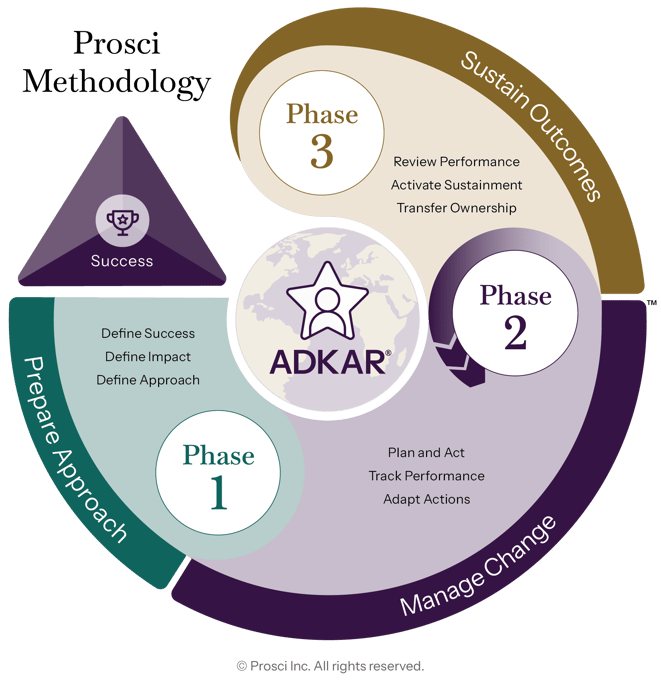
Why it matters
Change management protects the investment, reduces disruption, and increases the likelihood of delivering the results that matter.
Different teams feel change differently
A single initiative can reshape tools, workflows, roles, or expectations. Change management helps you tailor support to each group instead of relying on a one-size-fits-all rollout.
Change is constant and overlapping
Organizations face multiple, connected changes at once. A structured approach keeps people aligned, reduces fatigue, and sustains momentum across initiatives.
ROI depends on adoption
The value of a new system is realized only when people use it well. Change management builds the readiness and capability that turn investments into measurable results.
Outcomes require more than delivery
Projects can meet technical requirements and still fail to deliver outcomes. Change management closes the gap between delivery and real-world impact.
Better odds of success
When sponsorship, communication, and training are intentional, teams are more likely to meet timelines, budgets, and quality expectations.
Less risk and rework
Ignoring the people side creates rework, delays, and resistance. Planning for adoption lowers avoidable costs and protects the initiative.
Reduced variability
Change management reduces uncertainty by guiding people through clear steps. It makes the transition more predictable and easier to sustain.
Long-term capability
Building change skills inside the organization creates resilience. Teams can handle future change with less disruption and more confidence.
Improving project outcomes
Project management delivers the technical solution. Change management ensures people adopt it. When both disciplines work together, outcomes improve across timelines, budgets, and performance.
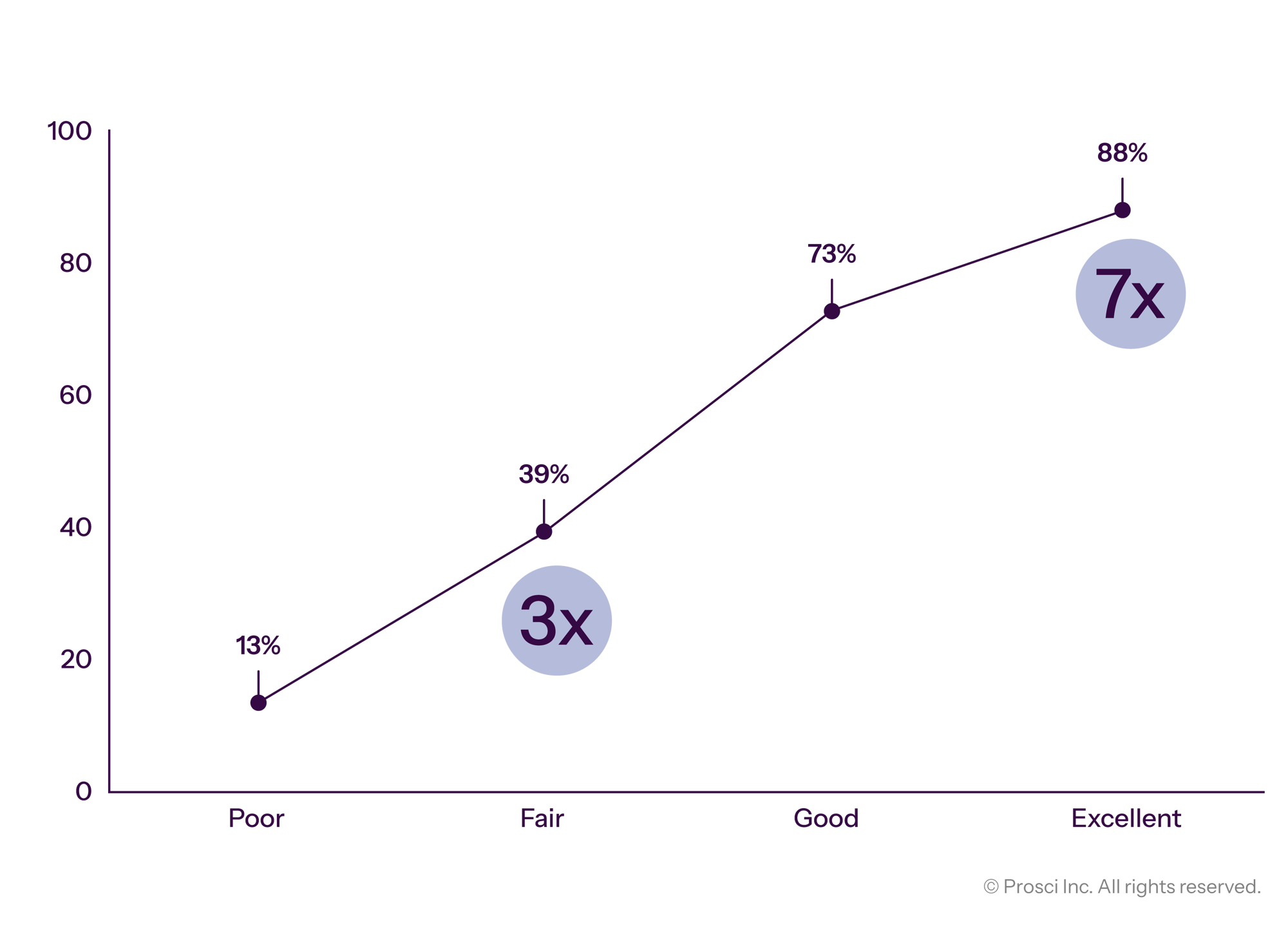
Strong change practices reduce rework and help teams realize benefits faster while keeping momentum high.
Impact on your organization
When people feel prepared and supported, they move through change faster, with less disruption and stronger results.
Without change management
Employees feel surprised and overwhelmed.
 Failed project results
 Extended project timelines
 Additional project costs
 Low adoption and usage
With change management
Employees feel equipped and confident.
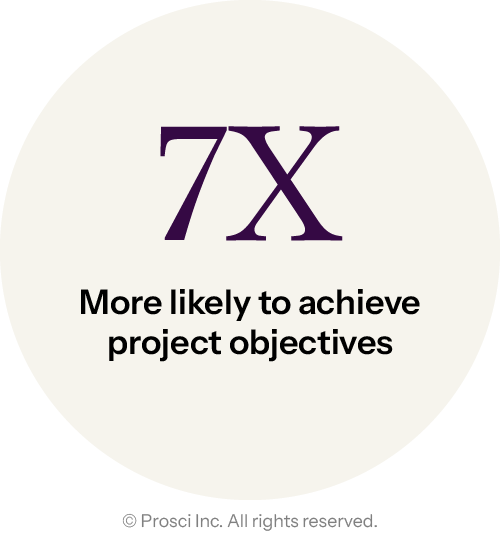
 More likely to meet objectives
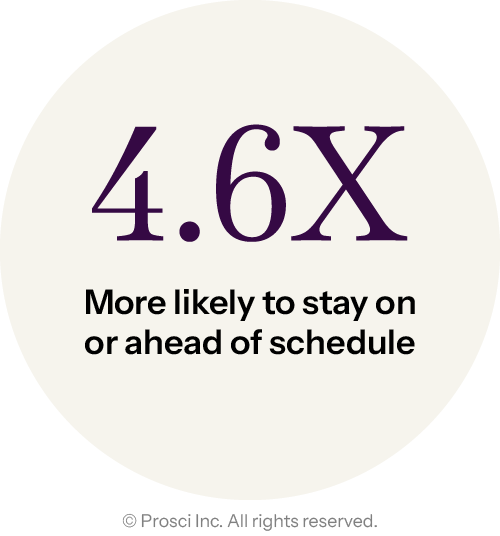
 More likely to stay on schedule
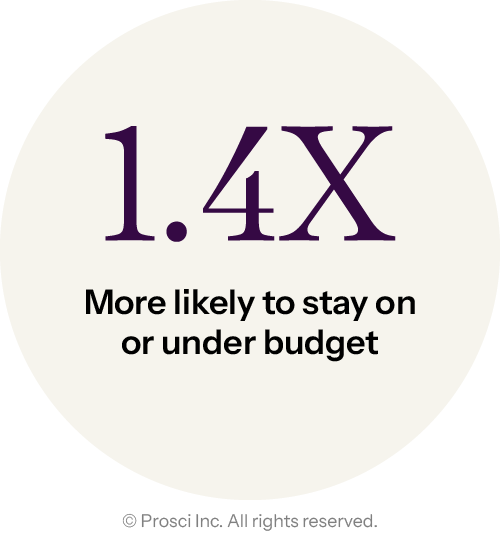
 More likely to stay on budget
 People-dependent ROI achieved
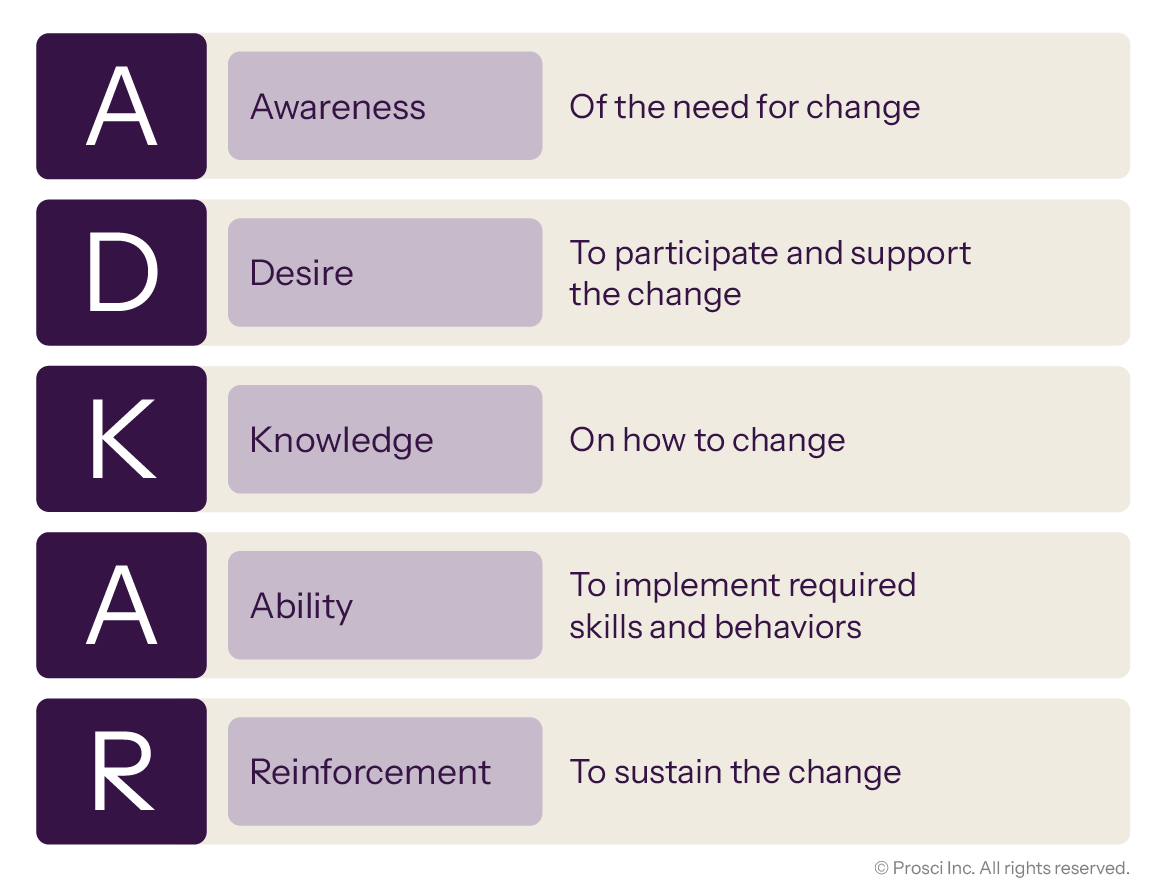
Building change capability
Sustainable change requires more than a single project plan. It takes a repeatable approach and shared language so teams can lead change again and again.
When leaders reinforce the change and teams have clear tools, organizations can scale adoption and stay ready for what comes next.
Prepare
Align sponsorship and define the change strategy before launch.
Manage
Execute communication, training, and coaching so people can adopt.
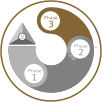
Sustain
Reinforce new behaviors and measure adoption to keep results.
FAQs
What types of change require change management?
Any shift that changes how people work can benefit from change management. This includes technology rollouts, process redesigns, restructures, and culture initiatives.
What are the core elements of an effective approach?
Effective approaches pair strong sponsorship, targeted communication, role-based training, and reinforcement so adoption sticks over time.
How do you measure success?
Track adoption, proficiency, and sustained usage alongside project outcomes. Surveys, performance metrics, and stakeholder feedback help validate progress.
What role do leaders play?
Leaders build trust and momentum. Visible sponsorship, clear messaging, and consistent reinforcement are strong predictors of success.
Ready to strengthen change outcomes?
Build a change approach that protects your investment, engages your teams, and turns strategy into results.