
Change management at the project level
The application of the structured process and set of tools for leading the people side of change to achieve a desired outcome on our project.


Driving change success by preparing, equipping and supporting individuals to thrive through change.
Change management as a discipline has evolved and matured over the past quarter of a century. Prosci research tells us that for changes to be successful, we must prepare, equip and support individuals moving through changes so that they successfully adopt the changes. Without adoption, changes will not be successful and we will not deliver the desired outcomes.
Change management is an enabling framework for managing the people side of change.
Managing change is often simply comprised of a communications plan, where executive leaders or project managers communicate to the organization that there's change coming. But change management is much more than communicating what is changing, such as a system implementation or an acquisition.
We must support people in the organization through their transitions from the current state to the future state, and understand what is needed to influence each person to embrace and adopt the change.


Organizations adopt the discipline of change management in different ways depending on their business needs. Change management can vary in scope and purpose, and one organization might define and implement it differently than another.
So it's especially important that companies leverage a structured yet flexible approach to managing change in their organizations.
The application of the structured process and set of tools for leading the people side of change to achieve a desired outcome on our project.

A leadership competency for enabling change within our organization and a strategic capability designed to increase our change capability and responsiveness.
Whatever change management might look like, the end goal is to help individuals make a change to help the organization be more successful.
How you manage change impacts the things that matter most to your organization, including your employees, your customers and your profitability. Given that organizations are facing faster and more complex changes than ever before, the reasons for change management are only growing.
The Key Question:
What percentage of overall results and outcomes depends on adoption and usage of the change?
Project management, which focuses on the technical side of change, and change management, which focuses on the people side of change, both play critical roles in change success.
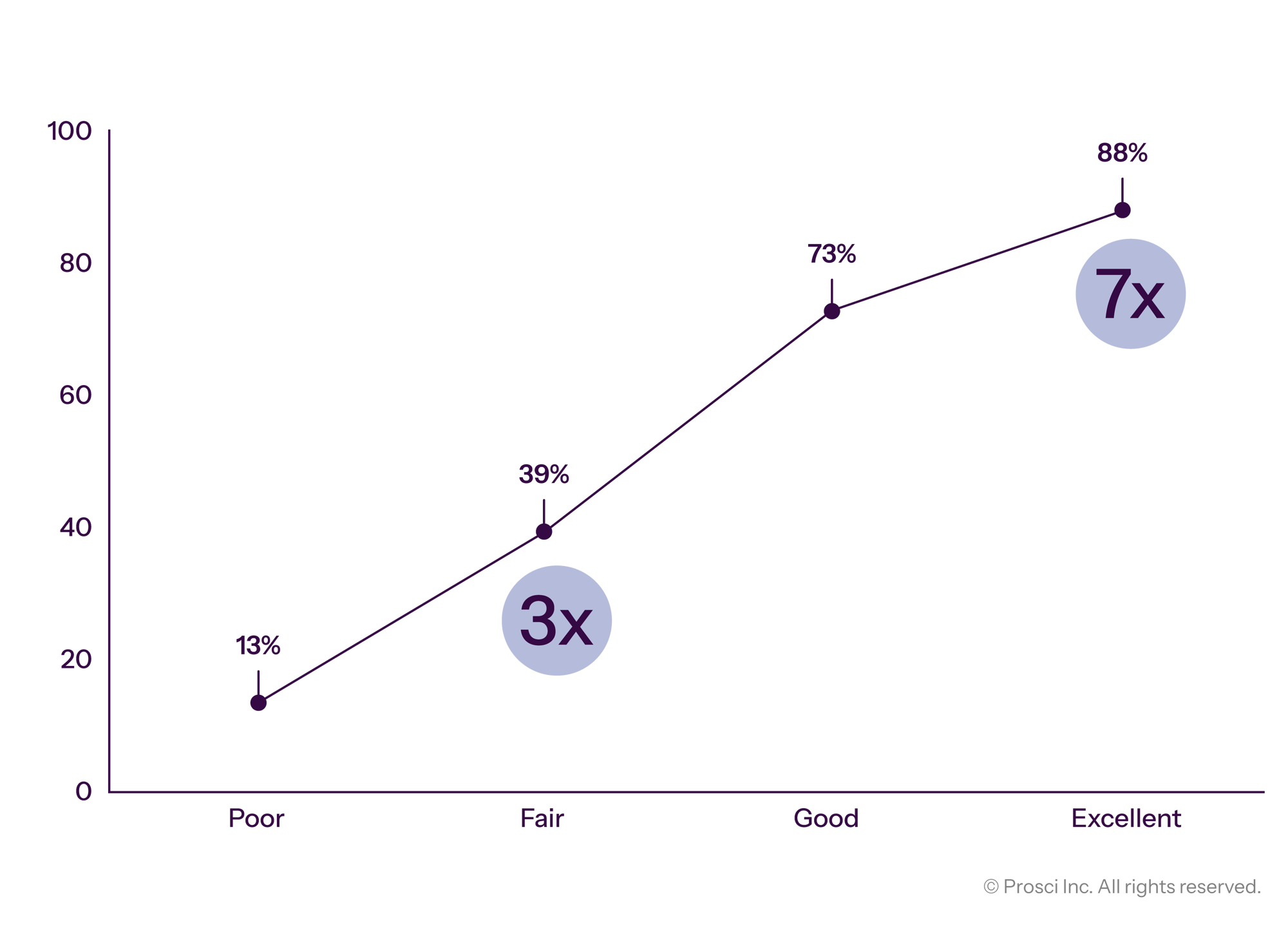
The costs and risks of mismanaging change can be significant, impacting timelines, budgets and more.
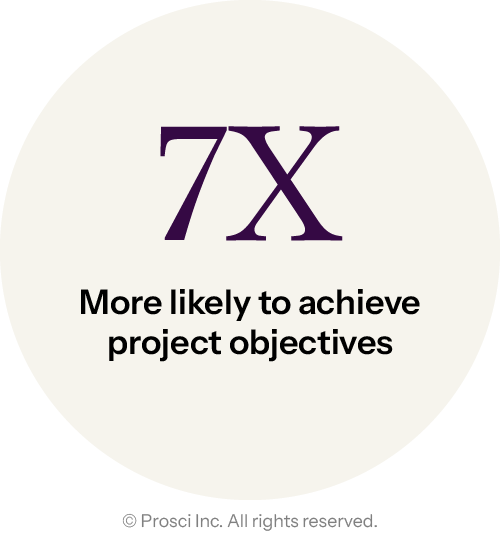
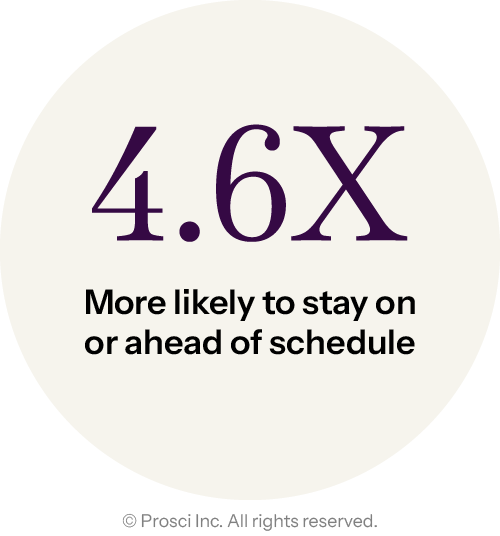
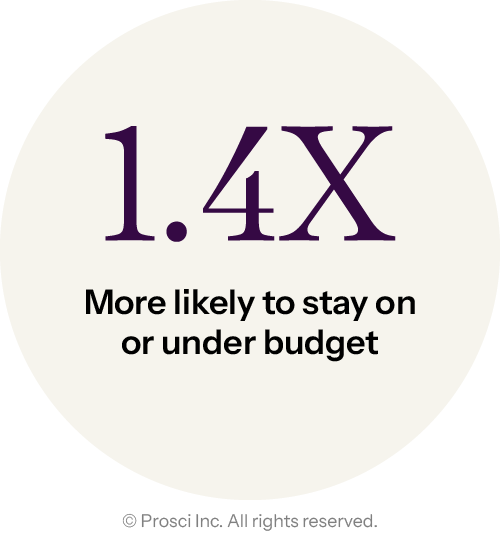
Prosci's research consistently shows that organizations with excellent change management achieve greater success with change.
Employees feel surprised and besieged by change
 Failed project results
 Extended project timelines
 Additional project costs
 Low adoption and usage
Employees feel prepared, equipped and supported
 Likely to meet project objectives
 Likely to stay on schedule
 Likely to stay on budget
 People-dependent ROI achieved
With excellent change management, employees:
Applying the principles of change management before, during and after a project can go a long way in helping you achieve the desired returns on your project investments.

You can increase your organization's capacity for change and better prepare for future change by building your overall change capability.
Basically, enterprise change management is the systematic deployment of change management skills, tools and processes throughout an organization.

Hear from some of our customers on why their organizations are building change capability.

For a deeper dive into the what and why of change management, view our webinar about the Five Tenets of Change Management.
The Prosci Methodology is one of the most widely used approaches to change management in the world. To date, Prosci has certified more than 100,000 practitioners worldwide.
The Prosci Methodology and its associated models, tools and processes are based on 25+ years of research, making it a true best-practices approach to change management.
"The secret to successful change lies beyond the visible and busy activities that surround change."
- Jeff Hiatt, Prosci Founder

267,000+
Practitioners trained and certified worldwide
We use a structured process - the ADKAR Model - to guide individuals through a particular change to ensure that they embrace and adopt the change.
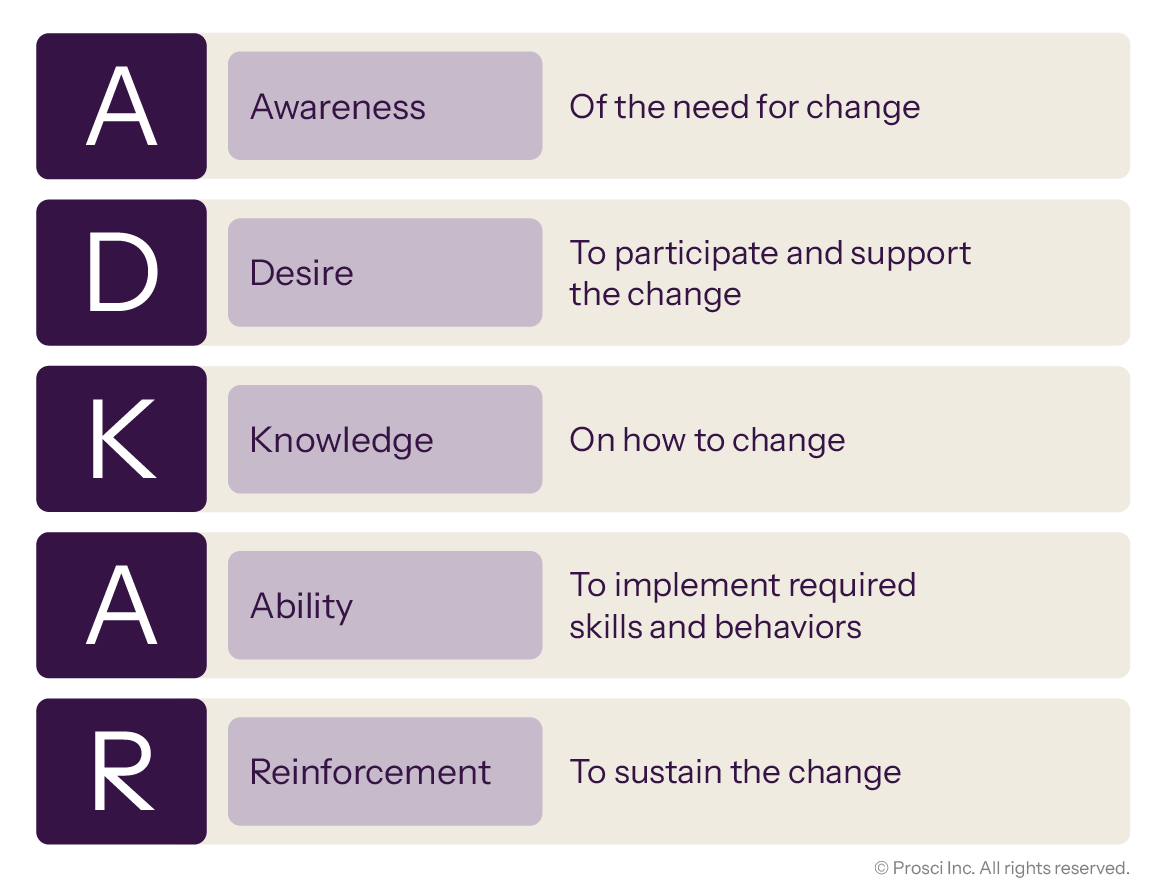

Practitioners, change sponsors, people managers and others are all involved in this process. By joining forces to apply the ADKAR Model, we can support people in their Awareness, foster Desire, provide Knowledge, ensure Ability and strengthen Reinforcement.
Thousands of organizations today leverage the ADKAR Model to take on their toughest change challenges.
While the ADKAR Model enables successful change at the individual level, the Prosci 3-Phase Process provides a framework for achieving change at the organizational level.
Here's the basic structure of the Prosci 3-Phase Process and the goals of each phase:
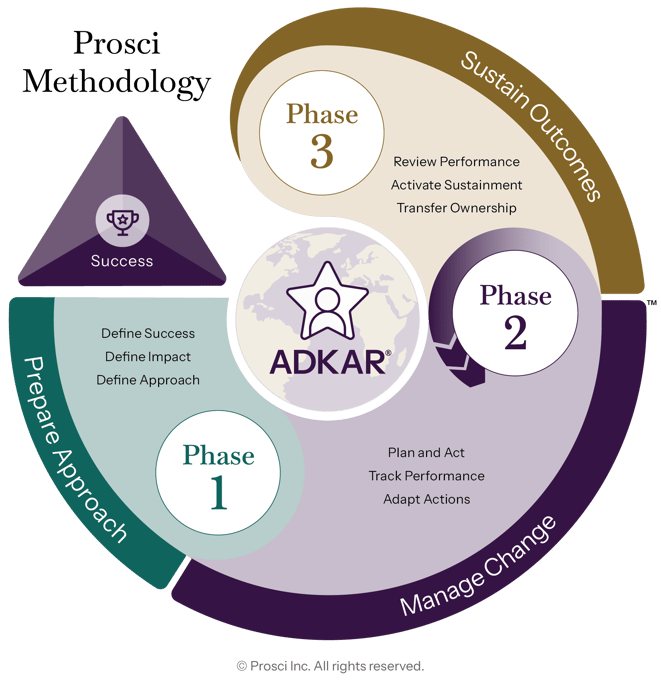
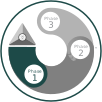
Phase 1 - Prepare Approach: To position the change for success by developing a customized and scaled change management strategy with the necessary sponsorship and commitment.
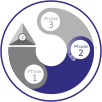
Phase 2 - Manage Change: To achieve adoption and usage of the change by creating, implementing and adapting plan(s) that will move individuals and the organization through ADKAR transitions.
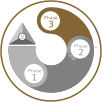
Phase 3 - Sustain Outcomes: To realize the value of the change by ensuring the change is adopted and the organization is committed and prepared to sustain the change.
Now that you have a basic understanding about what change management is, why it's important, and what a proven process for applying it looks like, we have many other resources available to help you gain a deeper understanding of change management.
For additional details about the ADKAR Model and Prosci 3-Phase Process, see the Methodology section of our website.


Organizations with structured change approaches are 7x more likely to succeed. Prosci Certification gives you the proven tools and process to lead successful change.
Get certified